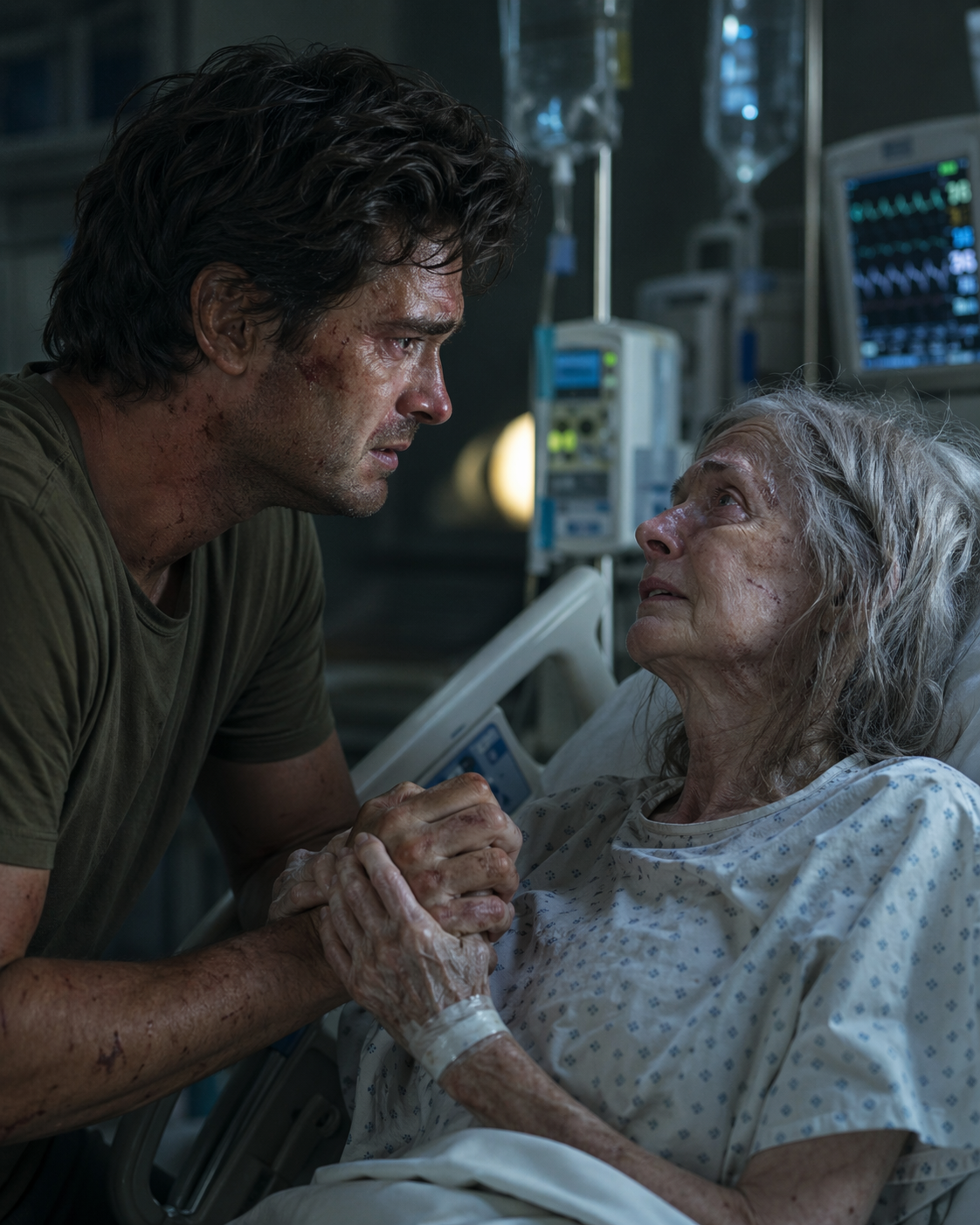
The day the doctor told me I had seven days left to live, my husband squeezed my hand so tightly that, for one brief second, I thought he was trying not to collapse in front of me.
Instead, he leaned in, brushed his lips against my ear, and whispered a sentence that killed me faster than any diagnosis ever could.
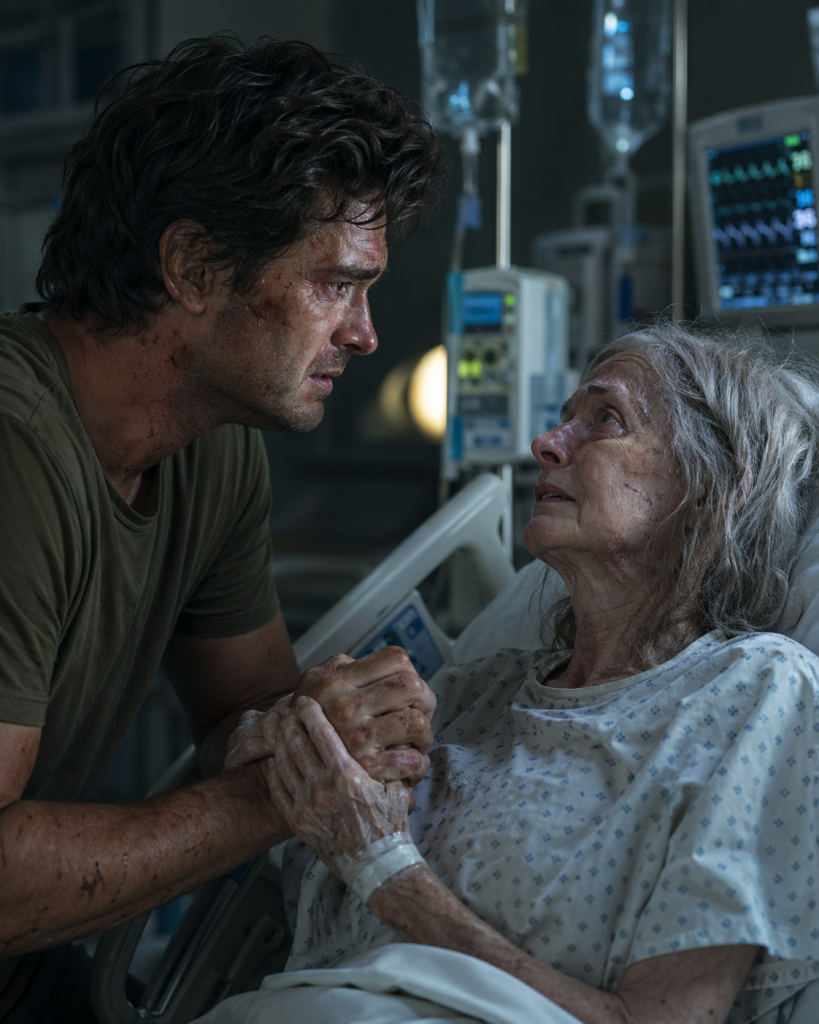
“As soon as you’re gone, this house, the land, and all your money will be mine.”
My name is Layla Sterling. I am twenty-nine years old, and until that moment, I believed there was nothing more terrifying than hearing that your organs were failing and no one knew why.
I was lying in a private hospital room with an IV in my arm, my lips dry, my body so weak that even crying felt like work.
Dr. Andrews spoke in that soft voice doctors use when they no longer want to make promises. He said my deterioration had been too fast. My kidneys and liver were failing. They were still searching for the cause, but we needed to prepare for the worst.
Seven days.
That was what he gave me.
Beside me, Bradley lowered his head just in time for the doctor to think he was holding back tears.
What a flawless actor my husband was.
The moment Dr. Andrews left and the door clicked shut, Bradley looked up.
There were no tears.
No fear.
No grief.
Only a calm so repulsive it made my stomach twist.
The peace of a predator watching its prey finally stop running.
“Seven days,” he repeated, almost smiling. “Honestly, I thought you’d last longer.”
I stared at him, unable to react.
I was too weak to scream.
Too stunned to know whether I had truly heard him or whether the fever had started to poison my mind.
“Don’t look at me like that,” he said, adjusting his jacket. “You’ve suffered enough. You need rest. And honestly, it’ll be good for me too when this is over.”
I wanted to ask him what the hell he was talking about, but my throat burned, and my tongue felt like stone.
Bradley stroked my hair with a tenderness so fake it made me want to vomit.
“I’ll bring you your usual,” he said. “It’ll help you feel better.”
The usual.
The mug.
The warm tea he brought me every night.
The one with the strange metallic bitterness I had tried to explain away a thousand different ways.
I remembered the first time I tasted it.
Bradley had smiled patiently and said, “It’s natural, honey. It’ll make you stronger.”
Then I remembered the plant in the garden.
One afternoon, a few drops of that same tea spilled into the soil by accident.
By the next morning, the leaves were yellow, withered, burned from the inside.
My dizziness.
My stomach pain.
The weakness that had crept through my body for months.
Always accompanied by Bradley’s insistence on taking care of everything himself.
My drinks.
My pills.
My meals.
My appointments.
My words.
And suddenly, everything clicked into place so fast that fear turned into something colder.
Maybe I wasn’t just dying.
Maybe I was being murdered.
When Bradley left the room, pretending to be a loving husband in a hurry, I stared at the closed door.
Then I did something I had not been able to do in days.
I forced my body to move.
Hidden beneath my pillow was a tablet.
I had smuggled it into the hospital three days earlier because of a hunch I had refused to call paranoia.
The tablet gave me access to the hidden cameras in my father’s house.
The house that was now mine.
The house Bradley had already begun speaking about as if it belonged to his future.
With trembling fingers, I called Clara first.
Clara had worked in our house since I was a child. Everyone called her the gardener, but she was more family than most of my relatives.
My father trusted her completely.
When I was younger and complained about it, he always told me the same thing.
“Layla, you don’t recognize loyal people when they applaud you. You recognize them when everyone else declares victory too early.”
Clara answered on the second ring.
“Little girl?”
She was the only one who still called me that.
“If you don’t help me today,” I whispered, “I won’t make it to the seventh day.”
She didn’t gasp.
She didn’t hesitate.
“Tell me what you need.”
“Go to the house,” I said. “Check the laundry room, the kitchen, the garden. Everything. And call Attorney Vance. Right now.”
“I’m on my way.”
I hung up and opened the security cameras.
Less than five minutes later, I watched the beginning of the end.
A black sedan pulled up to the main entrance.
Bradley got out first.
Then Lauren stepped out of the passenger seat.
Lauren.
The woman he called his “business partner” whenever I asked too many questions.
Tall.
Elegant.
Expensive perfume.
The smile of a woman who walked into unfamiliar places like she already owned them.
They were laughing.
I was in a hospital bed with a doctor counting down my final days, and they were arriving at my house like they were coming to celebrate.
Bradley grabbed Lauren by the waist.
She looked around shamelessly.
“Now it really looks like ours,” she said.
Ours.
That word hit harder than the diagnosis.
They went straight to my study.
The only room I always kept locked.
Inside, I had once kept deeds, jewelry from my mother, property documents, contracts, keys, letters from my father, and things worth nothing to anyone else but everything to me.
The security camera was hidden behind a clay figure on the shelf.
I watched them enter.
Bradley crossed the room without hesitation and went straight to the large painting behind my desk.
He yanked it off the wall, revealing the built-in safe.
Then he entered the code with a confidence that made my blood run cold.
He had been watching me more closely than I ever knew.
For one second, he smiled.
Then he opened the safe.
His face fell.
There were no deeds.
No jewelry.
No money.
No documents.
Nothing.
Just dust.
Lauren’s smile vanished.
“Where is everything?”
Bradley reached inside as if the papers might magically appear.
Then he slammed his fist against the metal door.
“It can’t be.”
“You told me they were still in there,” Lauren snapped.
“They were!”
I squeezed the tablet so hard my fingers hurt.
I wasn’t surprised.
One month earlier, after Bradley had asked me three separate times about the documents “just in case something happened,” I had sent everything to Attorney Vance.
At the time, I thought I was being paranoid.
Now, for the first time in weeks, I felt alive.
Then something happened none of us expected.
When the painting crashed to the floor, something fell from behind the frame.
A thick sealed brown envelope.
Bradley saw it at the same time Lauren did.
They both froze.
Then he bent down and picked it up with the caution of a man holding a grenade.
Lauren moved closer.
“Open it.”
She didn’t sound like a lover.
She sounded like an accomplice.
Bradley broke the seal.
Inside were folded papers and a USB drive.
He began reading the first page.
The camera couldn’t capture every word, but I saw the most important thing.
The color drained from his face.
White.
Dead.
At last, Bradley looked like a man who understood fear.
Lauren snatched one of the pages.
I zoomed in with clumsy fingers and instantly recognized the handwriting.
My father’s.
Ernest Sterling had been dead for two years, but somehow he still had a way of pulling strings from the grave.
He had been stern, difficult, and suspicious.
A man incapable of letting go without locking five doors behind him.
I had hated that about him.
I had blamed him for raising me to believe everyone wanted something from me.
But from that hospital bed, I finally understood.
He had not raised me to be distrustful.
He had raised me to survive.
The first line of the letter was visible.
“If you are reading this without my daughter’s permission, it means you have made the mistake I expected.”
Bradley swallowed hard.
Lauren read faster, her expression shifting from greed to alarm.
I saw names.
Dates.
Bank statements.
Photocopies.
Notary seals.
My father had not left behind a sentimental letter.
He had left a dossier.
I tried to sit up, but my body nearly gave out.
My heart was beating so fast I thought I might faint.
I called Mr. Vance.
No answer.
I called again.
Nothing.
Then Clara called me.
“I’m at the house,” she whispered. “I came through the back. I’m not alone. The lawyer is here. Someone else is with him too. Don’t worry.”
“What did they find?”
“A strange bottle hidden in a box of fertilizer. And unlabeled bags in the kitchen cabinet. We’ve taken pictures. Layla… don’t take anything Bradley brings you. Nothing.”
The room seemed to shrink around me.
“Clara,” I whispered, “it’s him, isn’t it?”
The silence lasted only a moment.
But it hurt.
“Your father suspected him before you even got married,” she said quietly. “That’s why he arranged everything with Vance. He didn’t tell you because he knew you would defend Bradley. But he left a clause in case anything happened to you.”
I closed my eyes.
I wanted to cry.
But the first thing I felt was rage.
Rage at Bradley.
Rage at myself for not seeing it.
Rage at my father for suspecting the truth and not telling me.
Rage at my own body for trusting the hands that had been guiding me toward the grave.
I looked back at the camera.
Lauren was no longer sweet.
“You didn’t tell me any of this,” she snapped. “You said when she died, everything would go to you.”
“That’s what the main will said.”
“So the old man set a trap.”
“Calm down.”
“I will not calm down,” she hissed. “What is this? A penalty clause? An audit? A foundation? A trust? And why are there copies of your debts in here?”
Bradley snatched the papers from her.
“Because that sick old man investigated me.”
I froze.
My father had investigated him.
Not just financially.
There were photos of Bradley entering hotels with other women.
Reports on a shell company.
Gambling debts.
A private settlement with an ex-girlfriend who had sued him for extortion.
Then I saw the line that would destroy him.
“If my daughter dies under suspicious circumstances, or if her spouse attempts to dispose of assets before an independent medical and legal review, the entire estate will be frozen and transferred to the Helen Sterling Foundation, with the trust managed by Clara Irving and Vance & Ross.”
Lauren’s mouth fell open.
“So if she dies a strange death, you get nothing.”
Bradley slammed his hand on the desk.
“Calm down!”
“And what about this?” she yelled. “She’s been getting worse for months, Bradley. Months. If anyone checks…”
She stopped.
So did I.
She had already said enough.
Months.
Not days.
Months.
My deterioration had not been sudden.
It had not been mysterious.
It had been planned.
At that moment, my hospital room door opened.
I nearly dropped the tablet.
Bradley stepped inside wearing his usual loving smile, holding a steaming mug in his hand.
“My love,” he said softly. “I brought your ginger tea. It’ll make you feel better.”
The smell reached me before he did.
That metallic undertone.
Barely hidden beneath lemon and honey.
I wanted to throw it in his face.
I wanted to scream.
I wanted to ask him how long he had practiced his grieving widower voice while planning my funeral.
But instead, I did the only thing that could save me.
I played my part better than he did.
“Thank you,” I whispered.
He sat on the edge of the bed, fluffed my pillow, and slid one hand behind my neck to help me sit up.
His touch made me nauseous.
“Take a few sips,” he said. “It’ll be good for you.”
I held the mug with trembling hands.
“Bradley.”
“Yes, love?”
“Look at me.”
He did.
I gave him a faint smile.
Just enough to confuse him.
Then I tilted the mug as if my strength had failed and spilled the liquid across the sheet.
Bradley shot to his feet.
“Layla!”
“I’m sorry,” I whispered, letting my voice sound weak. “I’m so tired.”
For one second, fury flashed across his face.
Then the mask returned.
“It’s okay,” he said tightly. “I’ll get another.”
“No.”
I stared at him.
“I want to sleep.”
He stood there, measuring me.
I could almost see him thinking.
Should he insist?
Should he force me?
Should he wait?
Finally, he touched my cheek.
“Rest. I’ll be back soon.”
The second he left, I called Vance again.
This time, he answered.
“Layla, listen carefully,” he said. “A forensic expert and an assistant district attorney are on their way. Do not eat. Do not drink. Do not sign anything. Do you understand?”
“Yes.”
“Your father left legal authorization for an independent review if medical suspicion was linked to financial interest. We have activated every protocol.”
For the first time in weeks, air entered my lungs.
I was not alone.
An hour later, three people entered my room.
Attorney Vance.
A woman in a gray suit with a severe expression.
And a tall man with a steady, determined gaze.
The woman introduced herself as Dr. Iris Robbins, a forensic expert.
The man was Stephen Ross, an assistant district attorney.
They wasted no time.
Dr. Robbins examined my IV line, requested my lab results, took samples from the damp sheet, and ordered the removal of every unregistered substance from my room.
Stephen spoke with hospital administration in a tone that made one thing clear.
This was no longer a private family matter.
Bradley returned just as a nurse was clearing the medication from my table.
“What’s going on here?” he demanded.
“An independent medical and legal review,” Vance said.
“I’m her husband.”
The prosecutor looked at him coldly.
“Exactly.”
Bradley turned to me.
No longer like I was a victim.
Like I was an obstacle.
“Layla, what did you do?”
I shifted in bed, still shaking, but no longer afraid.
“The same thing you did,” I said. “I stopped trusting.”
Dr. Robbins held up the sealed bag containing the sheet.
“This will be analyzed,” she said. “Along with your chart, previous IV lines, and any substances administered by family members outside hospital protocol.”
Bradley laughed nervously.
“My wife is dying.”
Dr. Robbins didn’t blink.
“That has not been proven. What has been proven is that someone wanted it to seem inevitable.”
I watched him unravel.
Finally, his terror was visible.
“This is absurd,” he snapped. “She’s confused.”
“Maybe,” Stephen said. “But if everything is clean, you have no reason to worry.”
Bradley lowered his voice and looked at me with pure hatred.
“You are going to regret this.”
I barely shook my head.
“No, Bradley. You’re the one who miscalculated.”
They removed him from the room.
He had not been arrested yet.
But the fall had already begun.
The next hours became a blur of tests, questions, envelopes, samples, calls, and names.
They discovered irregularities in my medical file.
A substitute nurse appeared too often in my records.
A resident supposedly signed orders he later denied authorizing.
The hospital kitchen had no record of preparing ginger tea for me, even though Bradley had been bringing “natural” thermoses for weeks.
Clara arrived near midnight, hands still stained with soil, and hugged me like she was trying to pull me back into the world.
“They found a notebook,” she whispered. “Payments. Transfers to someone at the hospital. And Lauren was arrested outside the house. She tried to leave with a suitcase full of jewelry and forged documents.”
I didn’t feel victorious.
I felt hollow.
Each piece of evidence revealed a more disgusting version of the man I had slept beside for two years.
The next morning, the preliminary results arrived.
Dr. Robbins walked in with an envelope and a steady expression.
“Your samples show traces consistent with progressive heavy metal and compound poisoning,” she said. “These levels are not accidental.”
I stared at her.
“So I wasn’t dying alone.”
Her voice softened.
“No. You were being led there.”
I cried silently.
For myself.
For my father.
For every time I had thanked Bradley for taking care of me while he was poisoning me.
And beneath the grief, there was relief.
Because if there was poison, there was a chance to stop it.
If a human hand was causing my body to fail, then my body had not completely betrayed me.
We could still fight.
Bradley was arrested two days later.
The nurse confessed first.
She said he had paid her to alter schedules, omit records, and allow him to administer “natural supplements” without supervision.
Lauren turned over messages to reduce her own sentence.
In those messages, Bradley spoke of me like an inconvenient countdown.
“Just hold on a little longer,” he wrote once. “When this is over, we’re moving to Miami.”
In one audio recording, he laughed and said, “A weak woman gives up faster when she thinks death is already near.”
When the prosecutor told me, I felt sick.
“We also found video from the kitchen,” he added. “Lauren is seen crushing pills and pouring them into a metal thermos.”
I said nothing.
I didn’t need his confession anymore.
There are some truths you don’t hear.
You absorb them into your bones.
Recovery was slow.
Humiliating.
Infuriating.
They changed my treatment completely. They detoxified my system and monitored my liver, kidneys, and heart.
For weeks, I could barely walk without feeling like my legs belonged to someone else.
But little by little, my body answered.
My test results stopped getting worse.
Color returned to my skin.
Dr. Andrews, the doctor who had told me I had seven days, apologized with tears in his eyes.
His apology came late, but I accepted it.
He had been deceived too.
One afternoon, Vance handed me another letter from my father.
This one was addressed only to me, with instructions to deliver it if the suspicion clause was ever triggered.
I opened it with trembling hands.
“Layla, if you are reading this, it means I could no longer protect you with my presence, so I had to protect you with foresight. Do not be ashamed of having loved poorly. The mistake was not trusting. The mistake belonged to the one who used your trust as a weapon. If you discover betrayal, do not hide it. Make it visible. Survive first. Forgive, if you wish, much later.”
I clung to that letter like an orphaned child.
For the first time, I understood.
My father had not left me a cage.
He had left me a net.
And because of that net, I was still alive.
Months later, I returned to the house.
I didn’t go inside immediately.
I stood in front of the white facade, watching the wind move through the bougainvillea, smelling the same earth I remembered from childhood.
Bradley had wanted that property for the name.
The money.
The power.
He never understood what it truly was.
Memory.
Roots.
History.
A place inherited not just through signatures, but through the strength to preserve it.
Clara came outside crying.
“You played a trick on me again, girl.”
I hugged her.
“Yes,” I whispered. “And this time, I’m staying.”
I went into the study.
The painting was gone.
The safe had been removed.
Only a pale rectangular mark remained on the wall.
I placed my hand against it and closed my eyes.
The metallic tea.
The tablet beneath my pillow.
The envelope behind the painting.
Bradley’s voice promising love while planning my death.
My father’s voice from beyond the grave, refusing to leave me alone.
Clara’s loyalty.
And the moment I realized the true death sentence had never belonged to me.
Then I called the press.
I didn’t want attention.
I didn’t want headlines.
But too many powerful men believe a woman’s suffering can be controlled in private, buried in quiet settlements, or filed away where no one looks.
I refused to become a rumor.
So I made the truth visible.
I handed over the evidence.
I named Bradley.
I named Lauren.
I named everyone involved.
I made sure the case could never disappear into silence.
At the end of one interview, a reporter asked when I realized my husband no longer saw me as a woman, but as property.
I thought about lying.
I could have said it was the first strange cup of tea.
The first contradiction.
The first secret message.
But I told the truth.
“I knew the day the doctor said seven days,” I said, “and my husband didn’t hear a tragedy. He heard a billing date.”
Since then, I have thought about that phrase often.
A billing date.
That was what I had become to him.
Not a wife.
Not a partner.
Not a life shared.
A pending invoice.
A useful death.
Maybe that is why I keep breathing with such stubborn force.
Because living after being reduced to an inheritance became more than survival.
It became justice.
Sometimes, at night, that metallic taste still returns in my memory.
I wake up gasping.
Then I touch the scar on my arm where the IV used to be.
I look at my father’s letter on the nightstand.
I listen to Clara watering the garden at dawn.
And I remember.
The doctor told me I had seven days left.
He was wrong.
Those seven days were not mine.
They were Bradley’s last days as a free man.
Lauren’s last dreams of living inside my walls.
The poison’s last days inside my body.
The lie’s last days before it was dragged into the light.
I was not the one who ended up buried.
The mask did.
The plan did.
The greed did.
And when everything finally collapsed, I was still standing in my own house, breathing air that no longer tasted like metal.
Because sometimes, the difference between a widow and a survivor fits entirely inside one spilled cup at exactly the right moment.