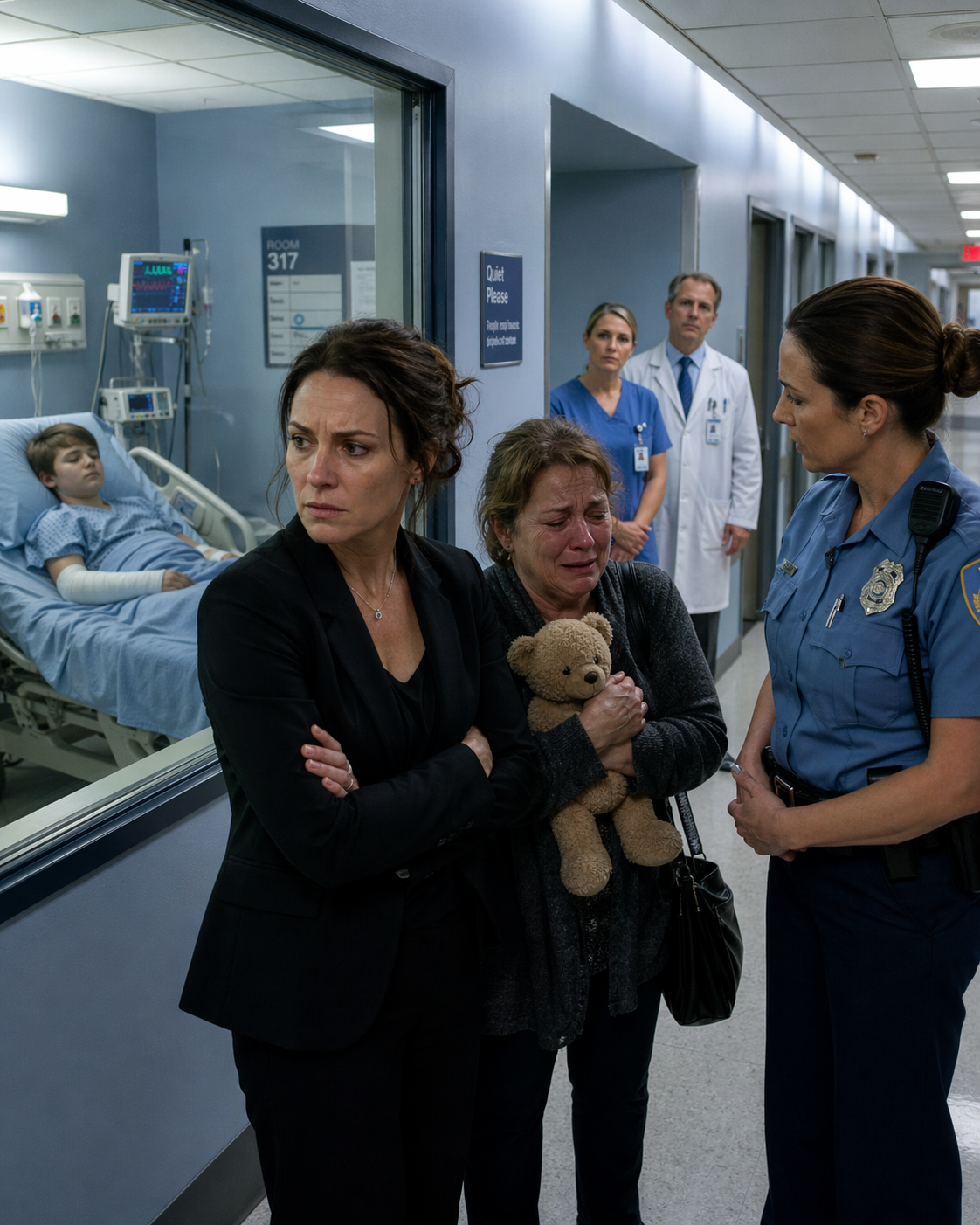
It wasn’t the cinematic crack of a baseball bat or the dramatic thud of a falling tree. It was smaller than that. Sharper. Wetter. A sickening snap swallowed by the violent rush of air forced from my eight-year-old son’s lungs.
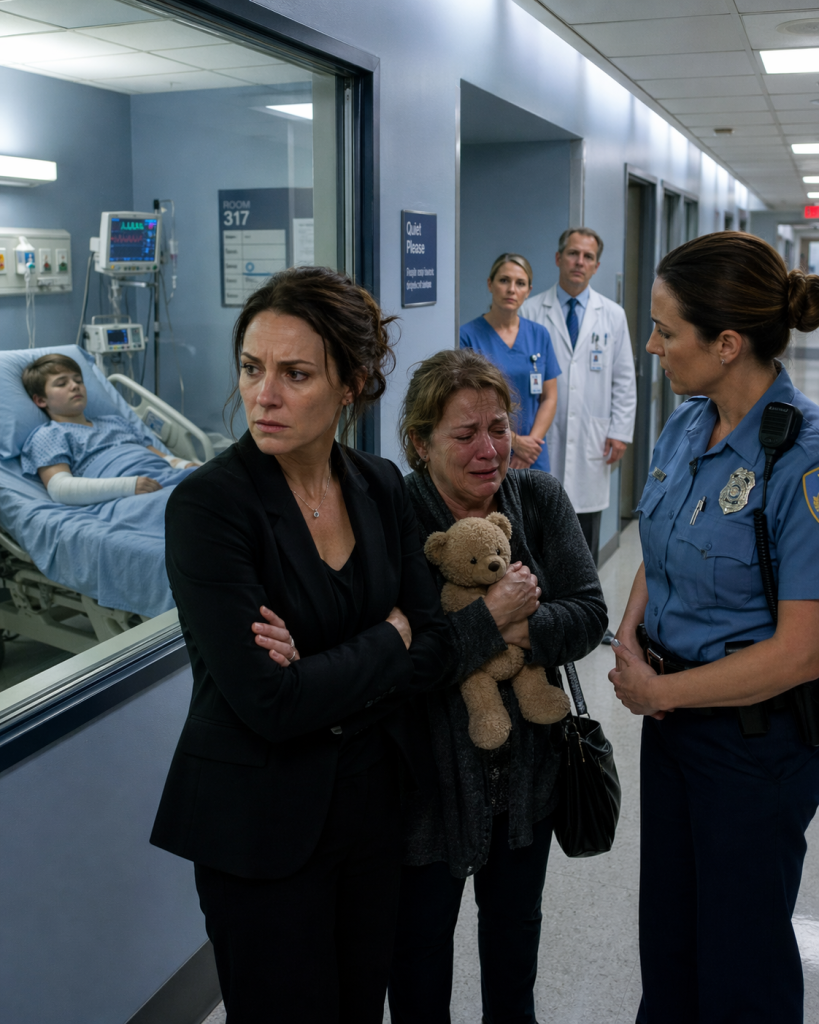
It was the kind of sound that does not leave you.
It lodged itself somewhere deep inside me, a permanent echo I knew would return in my nightmares for the rest of my life.
It was Thanksgiving afternoon at my parents’ sprawling, immaculate house in the suburbs. The air was thick with the smell of roasting turkey, sage stuffing, and the suffocating tension that always came with family gatherings. My husband, Mark, was out of state on a critical business trip, which meant I was alone—alone to navigate my mother, my father, my older sister Carla, and her twelve-year-old son, Ryan.
Ryan was huge for his age. Thickset, aggressive, and mean in the casual, practiced way that comes from a lifetime of being excused. Since birth, he had been taught that his athletic talent erased every cruelty, every tantrum, every violent outburst.
Carla called it “passion.”
My parents called it “competitiveness.”
I called it a disaster waiting to happen.
I was in the kitchen helping my mother arrange appetizers when a heavy thud shook the floorboards above the living room ceiling.
Then came the scream.
Not a normal childhood cry. Not a dramatic wail. It was high, thin, and tearing—the sound of pure agony.
I dropped the serving tray.
Porcelain exploded across the tile, but I didn’t stop to look. I was already running, sprinting out of the kitchen and down into the sunken living room.
My son, Leo, was curled on the expensive Persian rug in a tight fetal position.
His small chest jerked with rapid, shallow, desperate breaths. His face—usually flushed, warm, and full of life—had gone the color of wet ash. His eyes were huge, glassy, and filled with a terror so raw it ripped the air out of my own lungs.
“Mom…” he wheezed. “Mom, it hurts.”
Tears leaked from the corners of his eyes, but he was too focused on trying to breathe to truly cry.
I dropped to my knees beside him, my hands hovering uselessly over his tiny body, terrified that even touching him might make it worse.
“Where, baby? Where does it hurt?”
He couldn’t answer. He whimpered—a broken, panicked sound—and twitched his right shoulder.
The moment my fingers barely grazed the fabric of his shirt over his right ribcage, he let out a sharp, piercing cry that froze my blood. His whole body locked with pain.
Across the room, near the heavy oak coffee table, stood my twelve-year-old nephew, Ryan.
His fists were still clenched. His chest was heaving.
He didn’t look scared.
He didn’t look guilty.
He looked victorious.
He stood there glaring at my son with a dark, frightening intensity, as if this had been something won.
“What did you do?!” I screamed, my voice cracking as pure maternal terror flooded my system.
My sister, Carla, wandered in from the adjoining dining room, swirling a glass of expensive red wine like she was entering a cocktail party instead of a crime scene. She glanced at her son, then at mine writhing on the floor.
“Oh, for God’s sake, Sarah, calm down,” she said with a sigh, her voice dripping with bored contempt. “He just shoved him. Leo was probably being annoying and got in his way. Kids get rough. Boys fight. Don’t be hysterical.”
He just shoved him.
I looked back at Leo.
His lips were trembling. The skin around his mouth had begun to take on a faint, horrifying shade of blue.
He wasn’t catching his breath.
He was suffocating.
I yanked my phone out of my back pocket, my fingers shaking so hard I could barely unlock it. I pulled up the keypad and hit 9-1-1.
Before I could press call, a hand clamped around my wrist like a vise.
My mother.
She lunged across the coffee table with shocking speed and ripped the phone straight out of my hand.
“Don’t you dare,” she hissed.
Her eyes were wild, but not with fear for her grandson. Not with concern for the child gasping on the floor. She was staring at me with cold, calculating fury, angry that I was about to ruin the carefully staged illusion of a perfect holiday.
“Give me my phone,” I said, scrambling to my feet. “He needs an ambulance. Look at him. He can’t breathe.”
“You are overreacting,” my father muttered from his leather recliner across the room.
He hadn’t even muted the golf game.
He took a slow sip of his beer and barely glanced over. “Leo just got the wind knocked out of him. Tell him to walk it off.”
I stared at him.
Then at Carla, who was still smirking behind her wineglass.
Then at my mother, who had stolen the only lifeline I had because protecting a violent abuser mattered more to her than protecting my son.
“Give me my phone,” I repeated, stepping toward her, my voice low and deadly calm.
“No,” she said, taking one step back and slipping the phone deep into the pocket of her apron. “You are not calling the police on family. Ryan is a star athlete. He has a future. You do not destroy your nephew’s future over a little scuffle just because your boy is soft.”
Soft.
My son lay on the floor turning blue, and she called him soft.
In that moment, I looked at all of them—my father ignoring a medical emergency for a golf game, my sister defending her son with wine in hand, my mother physically preventing me from getting help—and I understood something with absolute, blinding clarity.
They thought they had trapped me.
They thought that without my phone, I would fold. That I would sit back down, swallow my rage, and let my son suffer quietly so they could carve turkey and protect their golden child in peace.
What they didn’t understand was that they had just set me free.
In that exact second, the emotional umbilical cord that had bound me to that family for thirty-two years snapped as cleanly as my son’s rib.
I didn’t argue.
I didn’t scream.
I didn’t beg.
I turned, grabbed my car keys from the entryway table, and walked back into the living room. Then I bent down, ignoring the scream in my own back, and carefully lifted my crying, eighty-pound son into my arms.
“Sarah, put him down, you’re being ridiculous!” Carla snapped, her smirk finally breaking. “Where are you going?”
“Mom, stop her!” my father shouted.
I didn’t answer.
I carried Leo through the front door, kicked it shut behind me with my heel, and stepped into the freezing November air.
Part 2: The Medical Evidence
I strapped Leo into the backseat of my SUV as gently as I could. Even then, he let out a low groan—a wet, rattling sound that sent a spear of terror straight through my chest.
I got behind the wheel, slammed the door, and threw the car into reverse.
I tore out of my parents’ driveway like a woman possessed.
My right hand locked so tightly around the steering wheel my knuckles turned white. My left arm stayed stretched behind me between the seats, my fingers resting lightly on Leo’s shaking knee.
“Stay with me, buddy,” I kept whispering, my throat thick with tears. “Just keep breathing. In and out. Mommy’s got you. We’re almost there.”
I ran three red lights.
I leaned on the horn.
I did not care.
If a police officer pulled me over, then fine—they could escort us the rest of the way.
By the time we burst through the sliding glass doors of the pediatric emergency entrance, Leo’s lips were unmistakably blue. His skin was cold and clammy. His breaths came in shallow, jagged pulls that looked less like breathing and more like drowning.
The triage nurse took one look at him and slammed her hand on a red button beneath the desk.
“Need a stretcher now!” she shouted down the hall.
Nobody asked for my insurance card.
Nobody handed me a clipboard.
They rushed him straight back on a gurney as a swarm of doctors and nurses descended on my tiny, terrified boy. I was left standing in a sterile waiting bay, pacing the linoleum floor with my heart pounding so violently it felt like it might split my ribs open too.
An hour later, the curtain to Bay 4 pulled back.
An ER attending physician stepped out—a tall man with graying hair and a tightly controlled expression that told me the news before he even spoke. He held a tablet in one hand.
“Mrs. Vance?” he asked quietly.
I shot to my feet. “Yes. Is he okay? Can he breathe?”
“We’ve stabilized his oxygen levels and given him IV fentanyl for the pain,” the doctor said. Then his voice dropped lower. More careful. “Your son has a severe displaced fracture of the seventh rib on his right side.”
He turned the tablet toward me.
On the screen was the X-ray—stark, black, and white.
There it was.
Clear as day.
A jagged break splitting the smooth curve of my son’s ribcage.
“The bone snapped inward,” the doctor explained, pointing to the image. “It narrowly missed puncturing his lung by less than a centimeter. If it had, his lung could have collapsed. Given his oxygen levels when you arrived…” He paused. “It could have been fatal.”
The room tilted.
I gripped the edge of the counter to keep myself upright.
Then the doctor looked me straight in the eye.
“Mrs. Vance,” he said gently but firmly, “this is not an injury caused by a simple fall or a shove.”