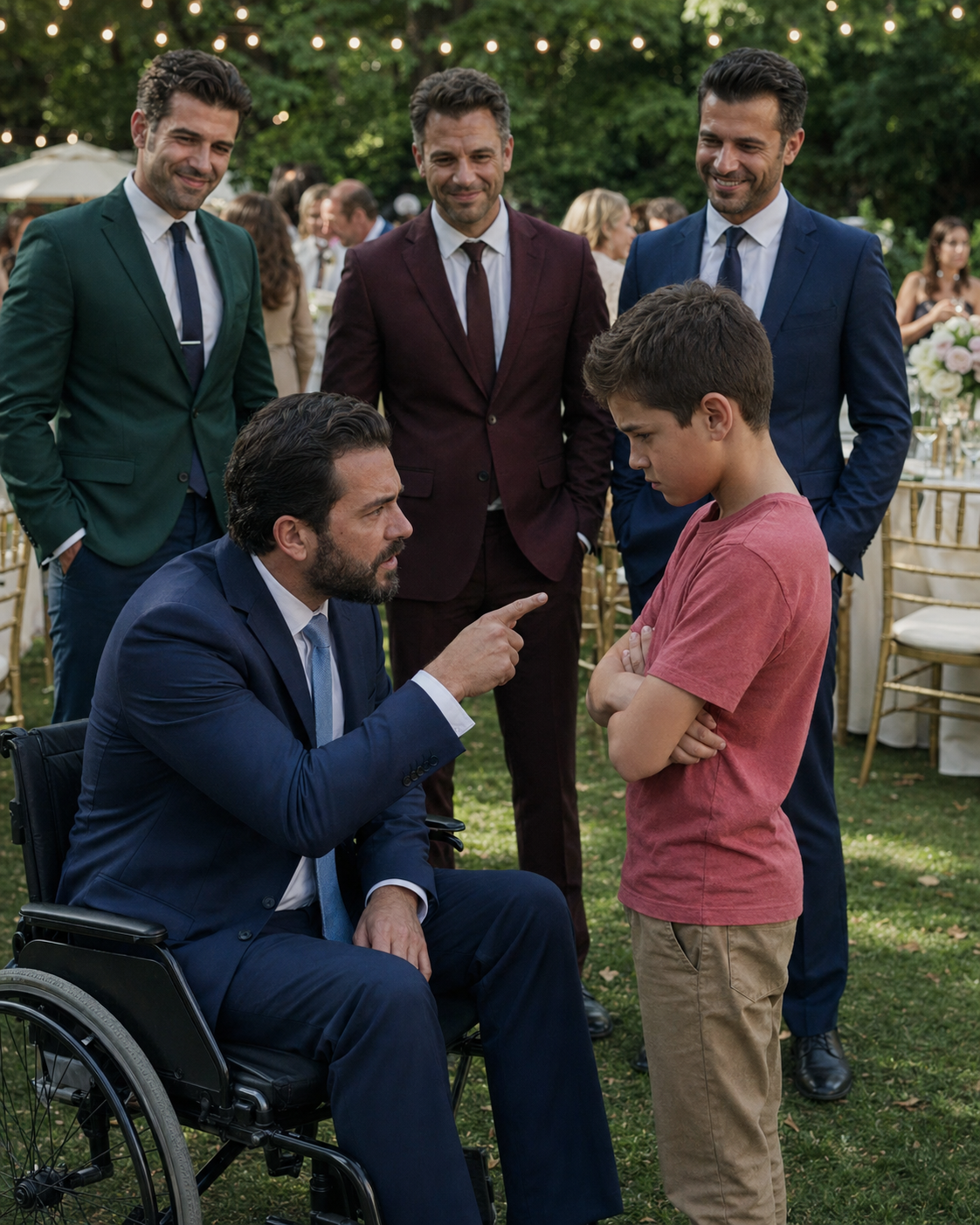
THE BOY NOBODY WANTED NEAR THE TABLE
On a sharp Friday night in late October, the patio of Hawthorne Ember resembled a place where real trouble was never expected to appear. Soft string lights hovered above polished tables.
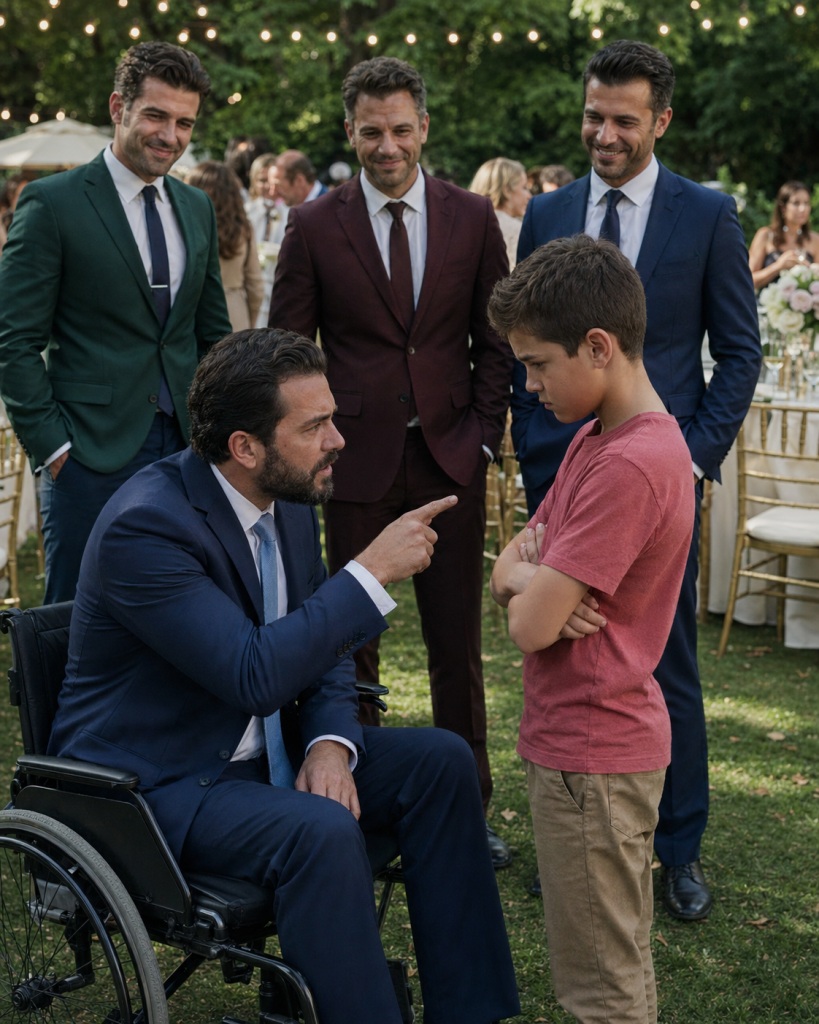
Tall heaters pushed out steady waves of warmth. Expensive glassware caught the golden glow, turning every toast into something that felt important. Guests leaned back as though comfort had always belonged to them. At the center sat Preston Hale.
He was the kind of man people recognized even before hearing his name. His tailored coat rested neatly on the back of his chair. His custom carbon-fiber wheelchair carried the same cold refinement as the watch on his wrist.
Everything about him reflected wealth, authority, and the expectation of obedience. Around him sat business partners, donors, and carefully composed friends who laughed whenever he did, even when nothing was funny.
Only a short distance away stood a boy who clearly did not belong.
His name was Micah Boone. Nine years old. Barefoot. Frail. Shivering inside a worn jacket far too large for him. His hair was tangled by the wind. His hands carried the rough marks of cold nights and harder days.
He looked like a child who had learned too early that being noticed could be dangerous, while being ignored could be worse.
Still, he moved forward.
His voice was soft but carried enough clarity to break through the noise.
“Sir… I think I can help with your leg.”
The table fell silent for a brief moment, then laughter spread across the patio.
Preston leaned back, staring at him as if he had just heard something absurd.
“You?” he said, brushing at the corner of his eye as though the laughter nearly overwhelmed him. “And how long is this miracle supposed to take?”
Micah swallowed, then replied with complete seriousness.
“Just a few seconds.”
The laughter intensified.
A woman covered her mouth. A man in a dark wool coat muttered about how strange the city had become. Another guest raised his phone, already preparing to turn it into a spectacle.
Preston pulled out his checkbook, placed it on the table, and smirked at the child.
“All right, doctor,” he said. “Fix my leg in a few seconds, and I’ll write you a check for a million dollars. If you fail, security will make sure you leave.”
Micah nodded once.
“Okay.”
He said it without arrogance or fear, at least on the surface. He said it like a boy who had already survived worse than ridicule.
SIX BLOCKS AND A DIFFERENT KIND OF HUNGER
Half an hour earlier, Micah had stood beneath the overpass near West Mercer Avenue, drawn forward by the scent of grilled steak drifting through the cold air.
Hunger had a way of shortening distances. What should have felt like a long walk became nothing when food waited at the end, even if it wasn’t meant for him.
He went behind the restaurant first, into the service alley where trash bins lined the brick wall.
That was where he found the magazines. A wealthy man who could no longer walk mocked a barefoot nine-year-old boy at his table and turned it into a million-dollar challenge — until the child touched his leg and whispered, “Count with me,” changing everything before anyone could react
The boy nobody wanted near the table
On a crisp evening in late October, the patio of Hawthorne Ember resembled a place carefully designed to avoid anything truly difficult ever happening. Soft string lights hung above polished tables.
Tall heaters pushed out steady warmth. Expensive glassware reflected golden light, making every toast feel significant. Guests leaned back as if comfort were something they were entitled to. At the center of it all sat Preston Hale.
He was the kind of man recognized before his name was even spoken. His tailored coat lay neatly over his chair. His custom carbon-fiber wheelchair carried the same cold refinement as the watch on his wrist.
Everything about him suggested wealth, authority, and being obeyed. Around him were business partners, donors, and composed friends who laughed whenever he did, even when nothing was funny.
Only a few steps away stood a boy who did not belong.
His name was Micah Boone. Nine years old. Barefoot. Thin. Shaking inside a worn jacket far too large for him. His hair was tangled by wind. His hands showed the rough evidence of cold nights and harder days.
He looked like a child who had learned too early that being noticed could be dangerous, while being ignored could be worse.
Still, he stepped closer.
His voice was quiet but carried enough clarity to cut through the noise.
“Sir… I think I can help with your leg.”
The table fell silent for a moment, then laughter spread across the patio.
Preston leaned back, studying him as if he had said something absurd.
“You?” he said, wiping at the corner of his eye as if the laughter nearly overwhelmed him. “And how long is this miracle supposed to take?”
Micah swallowed, then answered honestly.
“Just a few seconds.”
The laughter grew louder.
A woman covered her mouth. A man in a dark coat muttered about how strange the city had become. Another guest lifted his phone, ready to turn it into entertainment.
Preston opened his checkbook, placed it on the table, and smirked.
“All right, doctor,” he said. “Fix my leg in a few seconds, and I’ll write you a check for a million dollars. If you fail, security will make sure you leave.”
Micah nodded once.
“Okay.”
He said it without arrogance or fear, only certainty.
Six blocks and a different kind of hunger
Half an hour earlier, Micah had been beneath the overpass near West Mercer Avenue, drawn by the smell of grilled steak drifting through cold air.
Hunger made distance disappear. What should have been a long walk felt short when food was close, even if it wasn’t meant for him.
He went behind the restaurant first, into the alley where trash bins lined the wall.
That was where he found the magazines.
They had been tossed into a damp cardboard box—old medical journals with wrinkled pages, coffee stains, and bent corners. To anyone else, they were trash. To Micah, they were valuable.
He picked them up carefully, as if they might tear.
One article immediately caught his attention. It described sudden nerve compression caused by deep muscle spasm in the hip, producing symptoms that looked far worse than reality.
The language was difficult, but Micah read quickly and retained almost everything. Terms, sequences, angles, pressure points, recovery signs. He read it once, then again, then closed his eyes and rehearsed it mentally until it locked in place.
That kind of memory once impressed adults.
When he was six, a counselor called him remarkable. A clinic doctor noted his unusual recall. A nurse once told his mother, half joking and half serious, “This little guy watches like he’s already studying for medical school.”
Back then, those words felt like opportunity.
Then his mother became sick.
Everything changed after that.
The promise he made in a waiting room
His mother, Tessa Boone, never raised her voice in complaint. She apologized even when she was suffering. She worked long hours, skipped meals, and always made sure Micah ate first.
The day she collapsed, she still tried to smile at him.
He remembered the emergency room more clearly than most childhood memories. Bright lights. Hard chairs. A television playing something cheerful that felt out of place. His mother kept pressing her side, her voice growing weaker each time she spoke.
“Please,” she had whispered. “Please, I need someone to listen.”
People walked past. Someone said help would come soon. Someone else told her to wait. Time stretched unbearably. By the time anyone acted, it was too late.
Micah never forgot that silence.
After she died, he lost everything that mattered. Foster homes came and went. One left him on a porch with a bag and a promise that never returned.
Eventually, the overpass became his only constant.
At night, he watched St. Catherine’s Medical Center from a distance, learning from movement and sound. He read whatever he could find. Learning became the one thing no one could take from him.
Because once, no one had listened when it mattered.
What the guests could not see
Back at the patio, Preston shifted in his chair, grimacing as pain tightened in his leg. Guests assumed it was minor discomfort. Wealth made suffering look temporary.
Micah saw everything.
The angle of the foot. The stiffness in the hip. The way Preston tried and failed to sit straighter. The sweat forming at his temple.
At 8:15, a fork slipped from Preston’s hand and clattered onto the plate.
His expression changed instantly.
“I can’t move my leg.”
Silence replaced laughter.
A woman stood too quickly. Someone called for an ambulance. Another began listing symptoms into a phone with false confidence.
Help was delayed.
Eighteen minutes.
For them, it felt long. For Micah, it was enough.
He stepped forward again.
“Sir, I know what this is. I can help.”
Preston’s pride surfaced through the pain.
“Get this filthy kid away from my table.”
The air turned heavier.
Micah flinched but stayed focused.
“It isn’t what they think,” he said softly. “It looks worse than it is. The muscle is locked and pressing on the nerve. That’s why it feels like you lost control. I can release it.”
A guest frowned. “How would you even know that?”
Micah pulled out folded medical pages from his jacket.
“Because I read it. Just now. And I remember it.”
Eighteen seconds
Security moved closer. Phones recorded. The air tightened with doubt.
Pain changes everything.
Preston’s breathing shifted.
“If you’re wrong—” he began.
“Then stop me,” Micah said.
His voice carried authority that silenced the table.
Preston hesitated, then nodded slightly.
“What do you need?”
“Don’t move,” Micah said. “And count with me.”
He washed his hands carefully, slowly, then returned.
He knelt beside the wheelchair.
“There,” Micah said. “Count.”
Pressure followed.
Preston inhaled sharply. “One… two… three…”
Micah adjusted his hands.
“Keep going.”
“Four… five… six…”
Pain and disbelief mixed in Preston’s voice.
“Seven… eight… nine…”
“Ten… eleven… twelve…”
The crowd leaned in.
“Thirteen… fourteen… fifteen…”
Then something released.
A sharp internal shift.
Preston gasped.
His leg loosened.
Silence held.
He blinked, then moved his toes.
Hope replaced shock.
He lifted his leg.
Then stood.
The moment everything turned
A collective gasp filled the patio.
Preston stood trembling, staring at his legs. He stepped once, then again, testing stability.
Everything had changed.
He turned toward Micah and lowered himself.
“You gave me back control of my body,” he said unsteadily. “In eighteen seconds.”
Cameras recorded, but the moment no longer felt like entertainment.
Preston took out his checkbook and wrote the amount.
One million dollars.
He held it out.
Micah looked at it, then shook his head.
“I didn’t do it for money.”
“What do you want?” Preston asked.
Micah looked down briefly, then up.
“When my mom needed help, she kept asking people to listen. Nobody really did. I don’t want that to happen again. I want to learn for real. I want to go to school. I want to become the kind of person who listens before it’s too late.”
Silence followed.
Not discomfort.
Conscience.
A door opens at last
Dr. Meredith Sloan, an orthopedic surgeon present at the table, stepped forward.
“He knew exactly what he was doing,” she said. “Not everything, of course. He’s a child. But the recognition and precision are rare.”
She looked at Preston and the guests.
“That boy belongs in classrooms and labs, not on the street teaching himself from discarded pages.”
Preston slowly stood and took out his phone.
Something inside him had shifted permanently.
“No,” he said quietly. “He won’t spend another night outside.”
Calls were made.
An apartment was arranged. A school contacted. A trust created. A clinic funded in Tessa Boone’s name.
When Micah heard it, he cried quietly.
“She would have liked that,” he whispered.
The first safe night
That night, Micah stood inside a real apartment for the first time in nearly a year.
No danger. No noise. No fear.
A bed waited. Clean sheets. Warm light. Food. Water.
He moved slowly through the space, touching objects as if they might disappear. On the nightstand, he placed his mother’s hospital wristband.
Then he lay down.
And slept deeply.

No sirens. No wind. No hunger.
Just warmth.
The kind of future built by being heard
Months later, he walked through Briar Glen Academy in a proper uniform.
Teachers quickly understood his ability.
A clinic opened in his mother’s name. A year later, he spoke at a medical conference:
“Sometimes people don’t need someone extraordinary first. Sometimes they need someone willing to notice what others ignore.”
The room stood.
Every Saturday, he returned to the overpass area—not to survive, but to help.
Because someone had finally listened.
And everything changed.